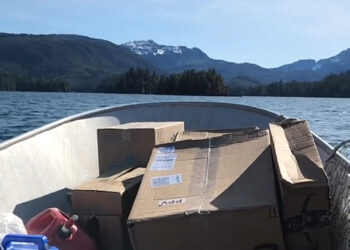
Thinking about moving to Port Protection, Alaska? Here’s what you need to know about buying property, legal requirements, costs, jobs, off-grid living, and the realities of relocating to one of America’s most remote communities.
Port Protection, Alaska, occupies a striking yet demanding location in Wooden Wheel Cove on the northwest corner of Prince of Wales Island. Its reputation as a place of rugged independence, forged in part by years of television coverage, continues to inspire those seeking a life closer to nature and farther from modern conveniences. The question many ask is straightforward: Can anyone simply decide to move there and make it work?
While there are no unique legal barriers preventing U.S. citizens or legal residents from attempting to live in Port Protection, the practical, financial, logistical, and personal realities create substantial hurdles. Success stories exist, but they typically involve careful preparation rather than spontaneous relocation. Here is a clear-eyed look at what it actually takes, based on current conditions in the community.
Legal Framework and Land Access
Anyone can legally pursue a move to Port Protection. There are no special residency permits or citizenship requirements that apply specifically to this community. As with most parts of Alaska, private property can generally be purchased by U.S. citizens, legal residents, and foreign nationals without citizenship or residency restrictions.
State land programs administered through the Alaska Department of Natural Resources (DNR) occasionally offer parcels for sale. Some competitive auctions or programs may give preference to Alaska residents (typically requiring proof of at least one year of residency), while others, such as certain Over-the-Counter sales, are open to non-residents.
Much of the surrounding area falls within the Tongass National Forest, managed by the U.S. Forest Service. Private parcels exist within and adjacent to the community, but new development is constrained by topography, environmental regulations, permitting requirements, and tidal/wetland considerations. Interested buyers should review current land availability, zoning, and rules directly through official state (DNR) and federal (USFS) channels.
In practice, the bigger questions revolve around finding suitable property (inventory is very limited) and having the financial and practical means to develop or maintain it in a remote, rain-heavy, forested environment with significant tidal influence.
The Financial Realities Newcomers Must Face
Cost of living in Port Protection is notably higher than in road-connected parts of Alaska. Groceries, fuel, building materials, and boat parts all carry transportation markups. Median household income sits around $42,762 according to available data, with many residents relying heavily on subsistence harvesting to stretch resources and reduce cash expenses.
Recent property listings illustrate the investment level often required. The Wooden Wheel Cove Trading Post—known locally as Jack’s Place and the community’s commercial center—is currently listed at $850,000 (reduced from $975,000 as of June 2026). This 4.45-acre oceanfront holding includes the main lodge, fuel dock, store with liquor license, rental cabins, and supporting infrastructure. It represents a turnkey business opportunity for those interested in operating the hub of the community.
Private residential parcels and homes, when available, typically range from the mid-to-high hundreds of thousands of dollars, depending on size, waterfront access, and existing improvements. Buyers should anticipate additional costs for off-grid systems—generators or solar setups, septic, water systems, and ongoing maintenance after storms. Public water is available on some parcels, which is viewed as a significant benefit in this remote setting.
Beyond purchase price, new residents must plan for variable income. Commercial fishing, charter operations, small trades, and subsistence form the economic foundation for many. Those without established skills or savings often find the transition difficult.
Skills, Mindset, and Lifestyle Factors That Determine Success
The practical demands of living in Port Protection are substantial. Competencies in boat handling and maintenance, fishing and game processing, basic construction and repair, wood harvesting for heat, food preservation, and mechanical troubleshooting are nearly essential for long-term success. Winters bring heavy rainfall, high winds, limited daylight, and potential isolation during storms, requiring serious preparation and resilience.
Mental and emotional readiness is equally important. The small population (roughly 20–40 residents, fluctuating seasonally) means a limited social circle. Healthcare access beyond basic needs generally requires travel to larger communities such as Craig or Ketchikan. Families with children must navigate education through the small local school when enrollment supports it.
Community integration matters. While Port Protection is not closed to newcomers, its tight-knit nature means relationships are personal. Those who thrive often bring useful skills, show respect for local customs, and participate in mutual support networks. Sudden or unrealistic moves can strain dynamics in such a small place.
Success stories frequently involve people with prior rural or remote experience, strong financial buffers, transferable trades, or family ties. Examples include individuals who purchased land years in advance, built gradually, and developed income streams like charters or trading post operations. Others, drawn by family circumstances or inheritance, have adapted over time. Those who ultimately leave often cite the cumulative weight of isolation, costs, physical demands, or changing family needs.
A Thoughtful Approach for Prospective Residents
For anyone seriously considering the move, starting with an extended visit is widely recommended. Charter operators provide packages that include lodging, meals, and guided activities, offering a realistic window into daily rhythms without immediate full commitment. Direct conversations with current residents about seasonal challenges, winter life, and economic strategies provide insights that no online search can fully replicate.
Financial preparation is critical. Many advisors suggest substantial savings to cover setup costs, transportation, and at least one to two years of living expenses while establishing reliable income. Developing or sharpening relevant skills through courses, apprenticeships, or time in comparable environments significantly improves the odds.
Regulatory details—building permits, fishing licenses, land use rules within the Tongass National Forest, and other requirements—should be reviewed through official state and federal resources before making major decisions.
Weighing the Dream Against the Daily Realities
Port Protection offers something increasingly rare: the opportunity to live deliberately, closely tied to the land and sea in a place where nature still sets the primary schedule. The independence, natural abundance, and human connections can be profoundly rewarding for the right individuals or families. Yet the challenges—higher costs, physical demands, logistical complexity, and limited services—are equally real.
The community evolves slowly, shaped by the people who choose to stay and contribute. For some, it becomes a lasting home. For others, the trade-offs prove too significant after a period of trying. There is no single formula for success, but preparation, adaptability, and realistic expectations consistently appear as common threads among those who make it work.
Anyone drawn to Port Protection would be wise to approach the possibility with equal parts excitement and careful consideration. The dream is accessible to those willing to do the work, but it is earned rather than simply claimed.
This article is for informational purposes only and is not legal, financial, or real estate advice. Consult qualified professionals, the Alaska DNR, and a licensed real estate attorney familiar with Southeast Alaska before making any decisions.