Investigating the science, CGI, and environmental history behind the viral legend of a radioactive super-predator lurking off the coast of New York.
The depths of the Atlantic Ocean off the coast of New York have long held secrets, but none quite as terrifying as the legend of a massive, mutated predator. As Discovery’s Shark Week 2026 approaches, a single question has set social media ablaze: Is Sharkzilla real or fake? With rumors of a radioactive shark documentary circulating and grainy clips appearing on TikTok, the line between marine biology and science fiction has become increasingly blurred for many viewers.
The frenzy reached a fever pitch following reports of mauled marine life washing ashore on the beaches of Long Island. This prompted a high-stakes investigation by conservation biologist Dr. Craig O’Connell, whose findings are featured in the upcoming special, Sharkzilla Takes New York. While the name evokes images of a Hollywood monster, the reality of what is lurking in the New York Bight is far more complex than a simple CGI creation.
What is Sharkzilla?
In the context of the 2026 Shark Week lineup, Sharkzilla is the moniker given to a theoretical super-predator suspected of haunting the waters near a legacy nuclear dumping ground. The investigation began when Dr. O’Connell noted unusual trauma on local marine carcasses that didn’t match the bite patterns of typical regional sharks. This led his team to explore the impact of historical environmental hazards on the local ecosystem.
Between 1946 and 1958, the waters surrounding certain islands and coastal zones were used for nuclear testing and waste disposal. In the special Expedition X: Atomic Sharks, researchers Phil Torres and Heather Amaro investigate similar phenomena in the Marshall Islands, where sharks are exhibiting highly aggressive and erratic swimming patterns. The New York investigation mirrors this concern, asking if “mutant” behaviors are the result of long-term exposure to submerged radioactive materials.
Is it based on real science?
To answer if Sharkzilla is based on real science, one must look at the documented presence of “mega sharks” in the North Atlantic. During the filming of Invasion of the Mega Sharks, researchers Dr. Neil Hammerschlag and Paul de Gelder tracked “Big Rose,” a great white of unprecedented proportions. While the idea of a Godzilla-sized shark is fictional, the existence of Great Whites and Makos reaching sizes that push the limits of known biology is a factual reality.
The radioactive angle is also grounded in environmental history. The United States military did detonate 67 nuclear bombs in the Pacific, and waste was indeed disposed of in Atlantic dumping grounds. Marine biologists are currently studying how these legacy sites affect the DNA and behavioral patterns of apex predators. However, the “radioactive shark” seen in sensationalized promos is often a dramatic interpretation of these very real ecological concerns.
CGI vs real footage
One of the primary sources of confusion for viewers is the distinction between Sharkzilla footage CGI and actual field recordings. Discovery Channel has confirmed that for the first time in the event’s history, the special Jurassic Sharks will utilize revolutionary CGI to resurrect prehistoric monsters like the Megalodon. This high-end visual effect work is often clipped and shared out of context, leading users to search for “Sharkzilla New York real” when they are actually seeing a digital reconstruction of a prehistoric species.
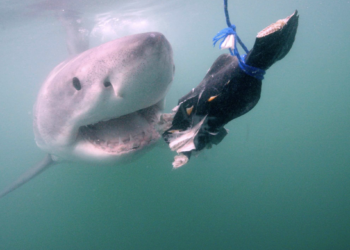
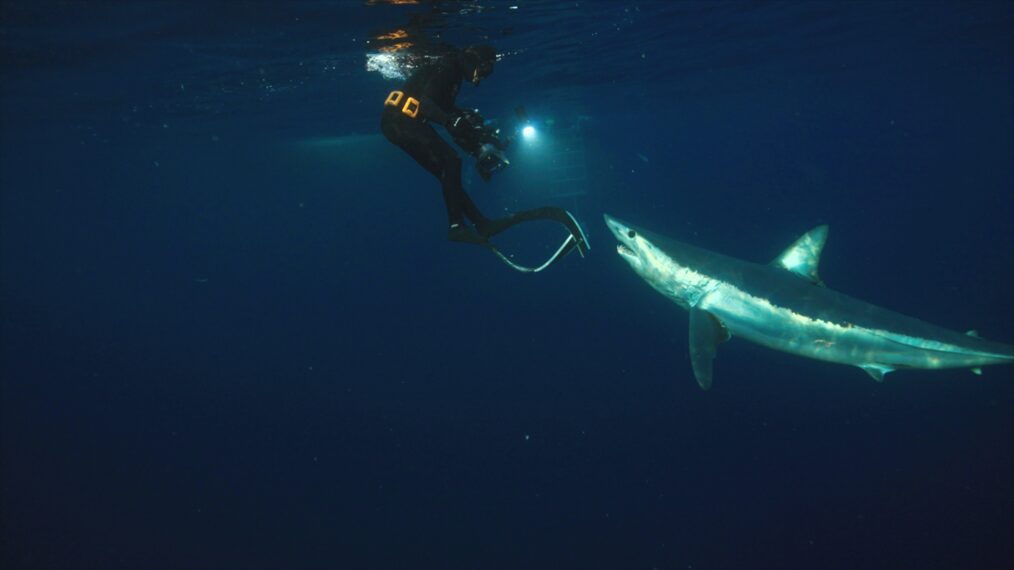
In contrast, the footage in Sharkzilla Takes New York features genuine underwater cinematography of large predators in an unexpected hotspot off the coast of the Hamptons. These are not computer-generated monsters, but massive, living Makos and Great Whites. The “monstrous” appearance in these clips is often attributed to the use of wide-angle lenses and the sheer scale of the animals found near the nutrient-rich dumping grounds.
Expert analysis
The consensus among the scientific community remains cautious. Experts like Dr. Tristan Guttridge and Forrest Galante, who are leading investigations into “Alien Sharks” and “Biggest Mako on Earth,” suggest that while we are discovering sharks that are “bigger and bolder” than previously recorded, they are still biological animals, not movie monsters.
In the special Biggest Mako on Earth, scientists investigate 15-to-20-foot Makos off Southern California—creatures long dismissed as fishermen’s tales. The discovery of these giants proves that the ocean still hides apex predators that can shock even seasoned researchers. The aggressive behavior noted in the “Atomic Sharks” investigation is being treated as a neurological or environmental issue rather than a “mutation” that creates a new species.
Final truth
The final truth behind the Sharkzilla legend is a blend of environmental reality and expert marketing. While there is no 100-foot radioactive lizard-shark terrorizing Manhattan, there is a very real presence of massive, highly aggressive apex predators thriving in the New York Bight.
The mauled marine life is real, the nuclear dumping grounds are real, and the massive sharks are real. The “Sharkzilla” name is a cultural hook for a much more serious investigation into how human waste and environmental changes are creating “hotspots” for the ocean’s most dangerous hunters. As Shark Week 2026 kicks off on Sunday, July 26, viewers will finally see the evidence that proves the truth is often more unsettling than the fiction.