As Shark Week 2026 takes over Discovery, a viral investigation into massive predators off the New York coast has sparked a debate over radioactive mutations and deep-sea giants.
The return of Discovery Channel’s Shark Week in 2026 has brought with it a wave of intrigue centered on the bustling waters of the Empire State. Among the 20 new premieres, one particular episode has ignited a firestorm of online speculation and viral debate: Sharkzilla Takes New York. This high-octane investigation dives into the deep, dark corners of the Atlantic to answer a question that has kept beachgoers on edge: what is lurking beneath the surface of the New York coastline?
What is Sharkzilla Takes New York?
Sharkzilla Takes New York is a featured premiere in the Shark Week 2026 lineup, led by conservation biologist Dr. Craig O’Connell. The episode serves as a scientific “whodunnit” that begins with a grisly discovery. A series of mauled marine life has been washing ashore along the New York coast, displaying injuries that suggest a predator of unprecedented size and aggression.
The investigation follows Dr. O’Connell as he attempts to track the culprit behind these attacks. The journey takes viewers from the crowded beaches of the city to the offshore depths of the Atlantic, specifically targeting areas where shark activity has seen a mysterious and dramatic uptick.
Is Sharkzilla based on a real shark?
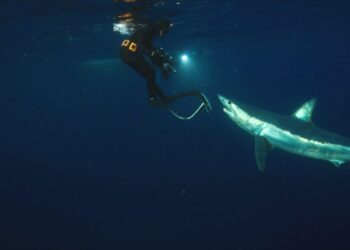
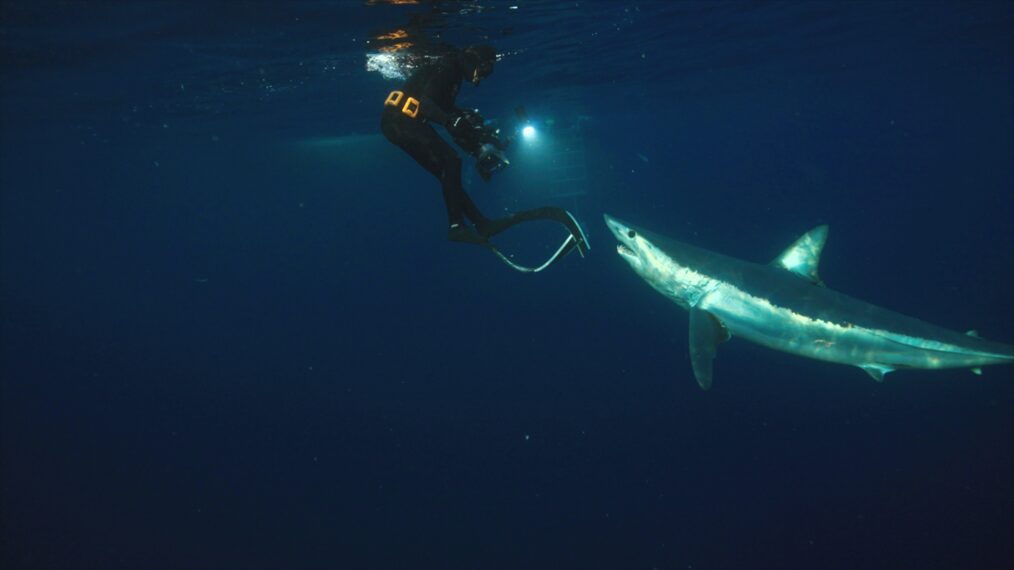
The name Sharkzilla naturally evokes images of movie monsters and science fiction, leading many viewers to ask if sharkzilla is real or fake. While the name is a play on the legendary “Godzilla,” the investigation is rooted in real-world biological anomalies. The episode explores the “Biggest Mako on Earth” theories, investigating rumors of mako sharks reaching lengths of 15 to 20 feet.
Historically, such sizes were dismissed as tall tales from fishermen. however, new footage and recent photographs of massive makos near Santa Catalina and the North Atlantic have forced the scientific community to reconsider. In the context of New York, the “Sharkzilla” moniker represents a very real, oversized predator—likely a massive shortfin mako or a great white—that is exhibiting behaviors far beyond the norm for its species.
Why New York waters are part of the story
It might surprise some to learn that the waters just off the coast of Manhattan and the Hamptons are becoming a primary theater for shark research. Why New York waters are part of the story comes down to a combination of conservation success and environmental factors. As water quality improves and prey fish like menhaden return in massive schools, apex predators are following the food source closer to the shore.
The episode specifically highlights an unexpected hotspot for massive makos off the coast of the Hamptons. More chillingly, the investigation leads Dr. O’Connell to an old nuclear dumping ground. This site, teeming with both great whites and makos, serves as the focal point for the episode’s most controversial theory: that the proximity to radioactive waste may be impacting the local shark population.
Is the footage real or enhanced?
In the age of viral videos, the question of is the footage real or enhanced? is inevitable. Shark Week 2026 utilizes groundbreaking technology and pioneering cinematography to bring viewers closer to predators than ever before. While some Shark Week specials, such as “Jurassic Sharks,” explicitly use revolutionary CGI to resurrect prehistoric species, the footage in Sharkzilla Takes New York is presented as authentic field documentation.
Dr. O’Connell uses innovative tagging technology and high-intensity underwater cameras to capture the predators in their natural habitat. While the production quality is cinematic, the goal of the episode is to document the raw power and untamed nature of these sharks as they currently exist in the wild.
What experts say in the episode
The investigation is not just about the thrill of the hunt; it is backed by high-stakes science. What experts say in the episode provides the necessary context for the “mutated shark” theories. Dr. Craig O’Connell and other returning experts like Paul de Gelder and Dr. Tristan Guttridge push the boundaries of traditional marine biology.
The team investigates reports of radioactive sharks New York locals have speculated about, looking for erratic swimming patterns or highly aggressive behaviors. The experts weigh the possibility of environmental stressors—such as the aforementioned nuclear dumping grounds—contributing to a new, elusive population of sharks that are larger and more territorial than those previously recorded in the North Atlantic.
Final explanation of Sharkzilla
Ultimately, the final explanation of Sharkzilla is a blend of environmental reality and apex predator evolution. The episode concludes that while a 50-foot monster might remain the stuff of cinema, the “Sharkzilla” found in New York waters is a testament to the mako shark nyc episode of growth.
The investigation confirms that the combination of abundant food sources and unique environmental conditions off the New York coast has created a “perfect storm” for shark growth. Whether influenced by the legacy of atomic waste or simply the natural selection of a flourishing ecosystem, the massive predators documented in Sharkzilla Takes New York prove that the ocean still holds secrets capable of dwarfing our wildest imaginations.
Discovery’s Shark Week continues to prove that the most heart-pounding investigations are the ones happening right in our own backyard.