Deadliest Catch reveals only part of the story. Discover the real dangers of Alaska crab fishing, Bering Sea storms, accidents, and survival odds.
Crab fishing in Alaska, particularly in the Bering Sea, stands as one of the most hazardous occupations in the world. The Discovery Channel series Deadliest Catch has brought this perilous job into living rooms worldwide, showcasing massive waves, ice-covered decks, and exhausted crews battling for king and snow crab. But how dangerous is it really? The short answer: extremely. While safety improvements have reduced fatalities significantly since the 1990s, the job still carries risks far exceeding most professions.
Commercial fishing as a whole has a fatality rate of roughly 100–200 deaths per 100,000 full-time equivalent (FTE) workers—dozens of times higher than the average U.S. job rate of about 3–4 per 100,000. In the Bering Sea crab fishery during its most dangerous periods in the 1990s, rates reached as high as 768 per 100,000 in some data sets, with an average of around eight deaths per year in a short, intense season.
This article dives deep into the real risks of crab fishing in Alaska—from massive wave heights in the Bering Sea to fishing deaths in Alaska, common accidents, and remarkable survival stories. We separate TV drama from harsh reality while explaining why this remains one of the ultimate survival fishing jobs.
Why the Bering Sea Is Deadly
The Bering Sea earns its reputation as a graveyard for ships and sailors. Located between Alaska and Russia, it is a shallow, stormy body of water where cold Arctic air clashes with warmer Pacific currents, generating extreme weather year-round. Crab seasons, especially for opilio (snow) crab and king crab, traditionally occurred in winter months when conditions are at their worst.
In the pre-rationalization “derby” era of the 1990s, fleets raced to fill quotas in just days or weeks. This pressure led to overloaded vessels, exhausted crews, and higher risks. One vessel and about five crew members were lost on average each year during that decade in the Bering Sea crab fishery.
Geography amplifies the danger. The Bering Sea is remote; rescue can take hours even in good conditions. Water temperatures hover near freezing (around 28–35°F / -2 to 2°C). A person overboard without protection faces death from hypothermia in minutes. Combine this with the economic incentive—hauls worth hundreds of thousands of dollars—and you get a high-stakes environment where captains push limits.
Deadliest Catch captures the intensity, but it cannot fully convey the cumulative fatigue, isolation, and constant threat. The show follows boats like the Northwestern, Wizard, and others out of Dutch Harbor, Alaska, but many tragedies occur off-camera. The series itself has seen connected deaths, underscoring that the danger is not manufactured for television.
Weather Conditions Explained
Bering Sea weather changes with terrifying speed. Storms bring sustained winds of 50–70+ knots (hurricane force starts at 64 knots), freezing spray, and low visibility. Winter gales are common, and “bomb cyclones” can intensify rapidly.
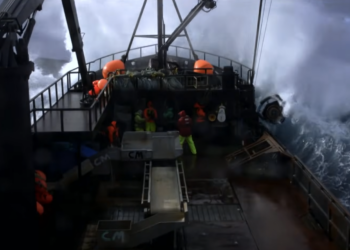
Wave heights in the Bering Sea routinely reach 25–40 feet during storms, with rogue waves exceeding 50–60 feet possible. These massive seas toss 100+ foot vessels like toys. Crews describe walls of green water crashing over the bow, flooding decks and threatening to wash men overboard.
Visibility drops in snow, fog, or sea spray. Freezing rain and snow add weight and reduce traction. These conditions explain why vessel disasters and falls overboard dominate fatality statistics. Climate patterns, including occasional marine heat waves, can influence crab populations and fishing patterns, but the core weather threat remains consistent.
Fishermen work extended shifts—often 20+ hours—hauling heavy pots in these conditions. Fatigue becomes a major risk factor, impairing judgment and physical coordination.
Ice, Waves and Freezing Risk – The Triple Threat
Icing is one of the most visually dramatic and deadly hazards shown on Deadliest Catch. Freezing spray coats the vessel, decks, rigging, and stacked crab pots. Even a few inches of ice raises the center of gravity, drastically reducing stability. In extreme cases, boats can capsize under the extra top weight.
Vessels must monitor icing closely. Crews use baseball bats, mallets, or steam hoses to chip ice—a dangerous, exhausting task in rough seas. Overloading with pots compounds the problem, a key factor in many 1990s sinkings.
Waves compound the threat. A 30-foot wave on a loaded crab boat feels cataclysmic. Water floods decks, shifting gear and knocking crew off their feet. Rogue waves—much larger than surrounding seas—have been responsible for sudden disasters.
Freezing risk extends beyond icing. Hypothermia sets in fast. Wet clothing loses insulating value. Crews wear layers, rain gear, and immersion suits (Gumby suits) for abandon-ship scenarios, but these are not always practical for constant deck work. Hands and feet suffer frostbite; decks become skating rinks.
This triple threat—ice, waves, and cold—makes every step on deck a calculated risk. One wrong move near a swinging pot (weighing 600–800 pounds empty, much more when full) or a winch cable under tension can lead to crushed limbs or worse.
Common Accidents on Board
Data from the U.S. Coast Guard, NIOSH, and BLS reveal consistent patterns in fishing deaths in Alaska:
- Vessel disasters (sinkings, capsizings): Historically around 40–50% of fatalities. Overloading and icing were primary culprits before safety reforms.
- Falls overboard: Roughly 30% of deaths. No one who fell overboard in Alaska fisheries between 2000–2014 was wearing a personal flotation device (PFD) in the fatal cases studied. Cold water shock and rapid incapacitation make recovery difficult.
- On-deck accidents: Crushed by pots, entangled in lines, struck by gear, or injuries from winches and hydraulics.
Man-overboard incidents spike during gear handling in heavy weather. Decks are cluttered, wet, and moving. A single lapse—fatigue, a slippery surface, or a rogue wave—can be fatal. Recovery is challenging; boats must maneuver precisely while a crew member is in icy water.
Other risks include entanglement in pot lines (which can drag a person under), head injuries from swinging equipment, and long-term issues like repetitive strain or hearing loss from engine noise. Crush injuries from the heavy steel pots and rigging remain common non-fatal incidents.
Survival Stories
Despite the odds, many fishermen survive against incredible odds, providing powerful lessons in survival fishing jobs.
One dramatic example involved a crewman swept off a stack of pots by a huge wave, only to be washed back aboard by the next. Others have been rescued after hours in life rafts following sinkings, such as the Alaska Ranger incident in 2008, where 42 of 47 crew were saved in harsh conditions.
Deadliest Catch has documented close calls, including man-overboard recoveries and vessels battling 30–40 foot seas. Real-world stories often involve quick thinking: deploying EPIRBs (emergency beacons), donning immersion suits instantly, or using life rafts effectively.
Veteran captains emphasize preparation, crew communication, and respecting the sea. Those who survive multiple seasons often credit strict safety protocols and experience. Many “greenhorns” learn the hard way that overconfidence kills faster than storms.
Stories also highlight human resilience—crews banding together, innovations in gear, and the drive that keeps experienced fishermen returning despite knowing the risks.
Safety Improvements and Modern Regulations
Significant progress has been made. In 1999, the U.S. Coast Guard implemented preseason dockside stability and safety checks for the Bering Sea/Aleutian Islands (BSAI) crab fleet. Vessels were inspected for overloading, stability, and lifesaving equipment (immersion suits, life rafts, EPIRBs). This program, combined with industry cooperation, cut the fatality rate by about 60%. Fatalities dropped from an average of eight per year to roughly one or fewer annually.
In 2005, the switch from a derby-style race to a quota-based “rationalized” system extended seasons, reduced pressure, allowed better crew rest, and led to fleet consolidation with more experienced operators. These changes further improved safety.
Modern boats feature better stability designs, improved forecasting, satellite communications, and mandatory safety drills. Many crews now emphasize PFD use during high-risk operations, though comfort remains an issue.
Challenges persist: fatigue, complacency, and the inherent unpredictability of the sea. Recent years have seen fatality-free stretches in Alaska commercial fishing, a testament to these efforts.
Is It Worth the Risk? Pay vs. Danger
Successful seasons can yield high earnings—deckhands sometimes make $50,000–$100,000+ in a few months, with captains and owners earning far more. This compensates for the danger, physical toll, and time away from family. However, not every season delivers, and medical costs or lost work from injuries add up.
Many fishermen cite the adventure, camaraderie, and connection to nature as motivators beyond money. Others eventually transition to less dangerous roles as they age.
How to Stay Safer – Advice for Aspiring Crab Fishermen
- Prioritize fitness and learn from veterans.
- Never work without proper gear; insist on PFDs when practical.
- Master vessel safety and emergency procedures.
- Communicate clearly and watch for fatigue in yourself and others.
- Respect weather forecasts and captain decisions.
Conclusion
Crab fishing in Alaska is genuinely dangerous. The Bering Sea danger stems from a perfect storm of extreme weather, heavy gear, remote location, and high stakes. While wave heights in the Bering Sea and freezing conditions pose constant threats, and fishing deaths in Alaska have claimed many lives, safety reforms have made meaningful improvements.
Deadliest Catch entertains while highlighting real risks, but the true story involves dedicated professionals who calculate risks daily. The job demands respect—for the sea, the crew, and the limits of human endurance. For those drawn to these survival fishing jobs, preparation and humility are essential. The Bering Sea remains unforgiving, but those who navigate it successfully embody remarkable human grit.
FAQ
How many deaths occur in Alaskan crab fishing each year?
Numbers have dropped significantly. In the 1990s, averages reached eight per year in the BSAI crab fleet. Today, the broader Alaska commercial fishing industry often sees far fewer, with some years recording zero fatalities thanks to safety measures.
What are the biggest waves in the Bering Sea?
Storms commonly produce 25–40 foot seas, with rogue waves over 50 feet. These pose severe risks to stability and crew safety.
Is Deadliest Catch accurate?
It captures much of the intensity and danger but condenses time and focuses on drama. Real seasons involve more routine hardship and cumulative risk than constant action.
What’s the survival rate for man overboard incidents?
Low without immediate recovery and protection. Cold water drastically shortens survival time, making PFDs and quick response critical. Many historical cases were fatal.
Are there safer alternatives to crab fishing in Alaska?
Other fisheries (e.g., salmon, halibut) or support roles in the industry carry lower risk. Many veterans move into these or shore-based seafood jobs as they gain experience.