A factual investigation into the major fleet tragedies, rogue waves, and medical emergencies that defined two decades of the Bering Sea documentary.
The Truth Behind the Cameras
For over two decades, Deadliest Catch has reigned as one of television’s most visceral documentaries. Its staying power doesn’t come from scripted drama or reality TV tropes; it comes from the brutal, unscripted reality of the Bering Sea. The series documents an environment where nature provides more drama than any writer could imagine, featuring savage storms, catastrophic mechanical failures, and life-altering medical emergencies.
This guide examines the major Deadliest Catch real events, separating verified maritime incidents from television storytelling. These true stories from the Alaska crab fleet serve as a sobering reminder that commercial fishing remains one of the world’s most perilous occupations. From the early sinking of the Big Valley to the emotional passing of Captain Phil Harris, the show captures the authentic human cost of the Alaskan crab fleet.
Major Real-Life Incidents and Fleet Tragedies
The series has often intersected with defining tragedies that shook the close-knit fishing community. The sinking of the F/V Big Valley remains the most significant event from the show’s infancy. On January 15, 2005, at the start of the opilio crab season—filmed for Season 1—the 92-foot vessel capsized in a violent storm. Investigations later revealed that overloading with pots contributed heavily to the boat’s instability. Five of the six crew members perished, with only survivor Cache Seel rescued from the icy water. The Cornelia Marie and other fleet vessels featured on the show participated in the frantic search efforts, setting a heavy tone for the remainder of the series.
In October 2008, the F/V Katmai capsized in the Aleutian Islands, an event referenced during Season 5. While carrying frozen cod, the 93-foot vessel suffered progressive flooding through open watertight doors during a storm. Of the 11 crew members on board, only four survived, including Captain Henry Blake, after spending harrowing hours in a life raft. This tragedy highlighted critical issues regarding vessel modifications and the necessity of emergency preparedness.
The F/V Destination tragedy, which unfolded in February 2017 during the Season 13 era, marked another dark chapter. The vessel vanished entirely, and all six crew members were lost. Investigators cited a combination of overloading, rapid ice accumulation, and stability problems. The loss deeply affected the show’s captains, many of whom had personal ties to the Destination crew.
More recently, the Scandies Rose sank on December 31, 2019, near Sutwick Island. Five of the seven crew members were lost to the sea. Survivors Dean Gribble and John Lawler endured hours in survival suits before rescue. Faulty stability instructions and extreme icing were identified as key factors. While these events are not always captured live by embedded camera crews, they are frequently discussed by captains on the series, serving as a constant reminder of the stakes involved.
Wave Footage Alaska: Capturing Nature’s Fury
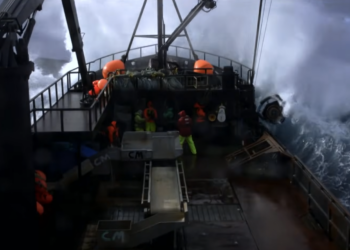
Deadliest Catch has provided some of the most terrifying storm footage ever recorded. In Season 2, the Aleutian Ballad was struck by a rogue wave estimated at 60 feet. The wave rolled the boat heavily, causing massive structural damage. Miraculously, Captain “Corky” Tilley and his crew managed to stabilize the vessel and return to port without fatalities. This sequence remains a definitive example of the Bering Sea’s raw, unpredictable power.
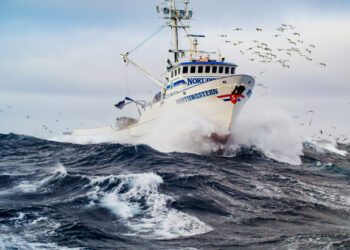
Captain Sig Hansen and the Northwestern have also faced numerous life-threatening weather systems. In Season 12, a 35-foot rogue wave buckled the vessel’s steel bow. The crew’s ability to assess damage while continuing operations showcased the high-level decision-making required in extreme conditions. Similarly, Captain Keith Colburn on the Wizard has battled repeated heavy weather across 19 seasons, often laboring through 40-foot seas and hurricane-force winds.
Other notable storm events documented include the Time Bandit nearly capsizing under the sheer weight of accumulated ice and various vessels navigating typhoon-influenced systems. The shallow depths of the Bering Sea cause waves to stack quickly, meaning conditions can deteriorate from manageable to deadly in a matter of minutes.
Medical Emergencies and the Passing of Captain Phil Harris
Health crises on the Bering Sea provide the series’ most emotional real incidents. The story of Captain Phil Harris is perhaps the most famous in reality television history. On January 29, 2010, while the Cornelia Marie was offloading crab at St. Paul Island, Phil suffered a massive stroke. He was medevaced to Anchorage for emergency surgery and placed in a medically induced coma.
While he briefly improved and was able to interact with his sons, Josh and Jake, Phil died on February 9, 2010, at age 53 due to an intracranial hemorrhage. With his prior consent, his final days were filmed, leading to one of the most-watched episodes in the show’s history. His death sparked a broader conversation about the lifestyle, stress, and physical toll inherent in the industry.
Other medical events highlight the difficulty of extraction. In Season 15, a wave on the Karie Marie sent a 600-pound pot into deckhand Cody Rhodes, breaking his leg. The footage of a medevac helicopter operating in rough conditions demonstrated the logistical nightmare of providing medical care hundreds of miles from the nearest hospital. Heart-related issues and stroke symptoms among crew members are also recurring themes, revealing that the danger is not just external, but internal.
Fishing Accidents and On-Deck Hazards
The deck of a crab boat is one of the most dangerous workspaces on Earth. Crab pots, which weigh between 600 and 800 pounds when empty, swing on lines with enough force to crush bone. In Season 15, a pot crushed a deckhand’s leg and hip area, requiring immediate evacuation. Bait choppers have caused amputations in Season 9, and ropes under thousands of pounds of tension have snapped with whip-like force, causing fractures and severe lacerations.
Man-overboard incidents are the ultimate fear. Survival time in the sub-freezing water is measured in minutes. The series has documented several rapid recovery efforts where crew training and quick action were the only things preventing a fatality. These accidents often occur when fatigue is at its peak during the long “grind” of the season.
Timeline of Major Deadliest Catch Real Events
2005: The sinking of the F/V Big Valley on January 15 (Season 1). Five crew members lost.
2008: The capsizing of the F/V Katmai in October (Season 5). Seven crew members lost.
2010: Captain Phil Harris suffers a stroke in January and passes away in February (Season 6).
2017: The total loss of the F/V Destination (Season 13). All six crew members lost.
2019: The sinking of the Scandies Rose on December 31. Five crew members lost.
The Documentary Approach and Lasting Impact
While critics sometimes point to selective editing, the show’s most significant real-life incidents align closely with U.S. Coast Guard reports and official news accounts. The show generally follows a strict documentary style, using embedded crews to capture real operations. The series has humanized the fishing fleet, showing the bonds and resilience of the crews alongside the risks.
More importantly, the show has influenced safety discussions. The transition from the dangerous “derby-style” fishing to a quota system has significantly reduced fatalities. Dockside inspections and better gear have also contributed to safety progress. However, as the show proves every season, economic pressures and the fury of the sea ensure that risks can never be entirely eliminated.
Lessons from Two Decades of Filming
Over 20+ seasons, Deadliest Catch has illustrated key truths about Alaska fishing:
- Safety Progress: Fatalities have declined due to dockside inspections, quota systems (ending dangerous derbies), better gear, and cultural shifts. Yet risks persist.
- Human Cost: Beyond deaths, injuries, trauma, and family strain are constant.
- Economic Pressures: High rewards drive decisions, sometimes against better judgment.
- Respect for the Sea: Veterans repeatedly emphasize preparation, caution, and humility.
Many view the show as a net positive for the industry, bringing respect and understanding. Others note it captures only part of the story—long monotonous hours alongside the highlights.
Why These Stories Matter
These real events from Deadliest Catch offer a window into a world defined by the thin line between success and disaster. The series chronicles a dangerous profession with a level of honesty rarely seen on television. By documenting the Big Valley tragedy, the Katmai loss, and the final days of Phil Harris, the sthow honors the fishermen who venture out and the families who wait ashore. Every massive wave and swinging pot represents real stakes for real people, ensuring the Bering Sea remains as respected as it is feared.
Frequently Asked Questions
Are all events on Deadliest Catch real?
Major incidents such as sinkings, rogue waves, and medical emergencies are verified by official reports, though editing may condense timelines for clarity.
What was the most tragic event featured?
The 2005 sinking of the Big Valley is widely considered the most tragic due to the loss of five lives during the show’s first season of filming.
Has the show led to safety changes?
While regulatory changes were already in motion, the show’s visibility has amplified public support for stricter stability checks and dockside inspections.
Do captains approve of how incidents are shown?
Most captains participate because they want to highlight the industry’s realities, though the raw nature of the footage can be difficult for the families involved.