Discover the groundbreaking marine biology and predator strategy behind Discovery’s Shark Week 2026 as we deconstruct the intelligence and efficiency of the great white kill.
The deep blue silence of the ocean is often shattered by a spectacle of raw power that has fascinated and terrified humanity for generations. As Discovery’s Shark Week 2026 prepares to dive into its most ambitious season yet, one particular investigation is capturing the public imagination: the groundbreaking study into the secrets of the great white kill.
For centuries, we viewed these apex predators as simple, instinct-driven hunters that relied on sheer force. However, new scientific findings are flipping that narrative on its head. The great white kill, explained through modern marine biology, reveals a level of strategic intelligence and real-time adaptation that was previously unimaginable. This is not just a story of teeth and speed; it is a story of a sophisticated predator strategy breakdown that proves why these sharks remain the undisputed rulers of the sea.
How Great Whites Hunt
The ocean is a vast, three-dimensional battlefield, and the great white shark is its most decorated general. To understand how great whites hunt, one must first appreciate their sensory arsenal. They do not just stumble upon their prey; they detect it from miles away using a combination of scent, sound, and electroreception.
Recent documentary footage highlights a fascinating shift in our understanding of their behavior. Scientists now believe that great whites are highly intelligent predators that adapt their hunting techniques in real time based on the environment and the specific target. Whether they are patrolling the kelp forests of South Africa or the rocky coastlines of California, their approach is calculated. They utilize the “stealth and ambush” method, often lurking in the depths where their dark dorsal coloration blends with the murky seafloor, making them invisible to seals swimming above in the sunlit surface waters.
Attack Sequence Explained
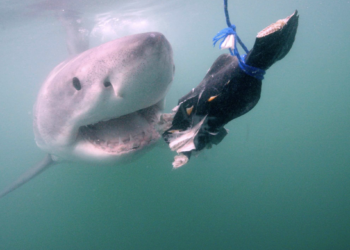
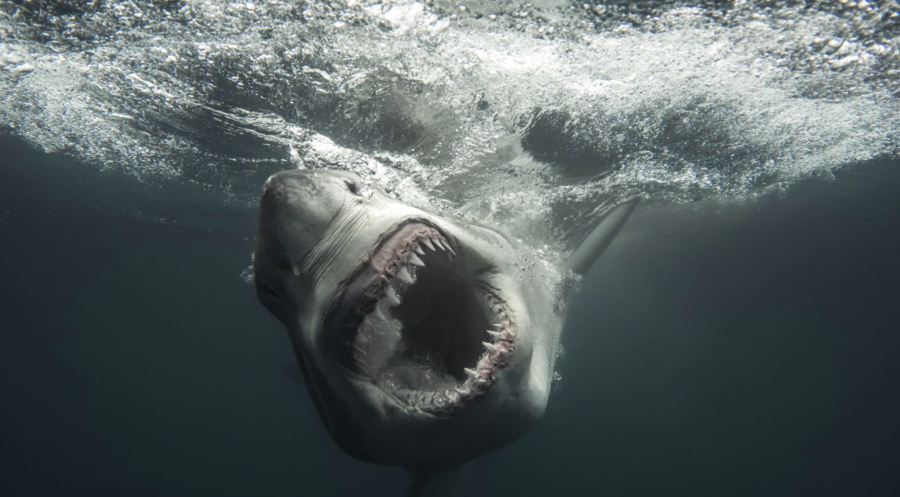
The climax of any encounter is the strike, and the attack sequence explained by experts reveals a multi-stage process of mechanical perfection. It typically begins with the “initial strike,” a high-speed vertical charge designed to incapacitate the prey immediately. This is often where we see the “Great American Breach,” a spectacular display of power where the shark’s momentum carries its entire body out of the water.
Following the initial hit, the shark often enters a “wait and bleed” phase. Rather than risking injury from a struggling seal’s claws or teeth, the great white will retreat for a few moments, allowing the prey to weaken. This tactical patience is a hallmark of an apex predator. Once the target is stationary, the shark returns for the final delivery, using its serrated teeth to act as both a gripping tool and a saw. This sequence is a masterclass in efficiency, ensuring the maximum caloric reward with the minimum risk of physical harm.
Why Sharks Are Efficient Predators
Efficiency in the wild is the difference between thriving and extinction. When examining why sharks are efficient predators, we look at millions of years of evolutionary refinement. Their cartilaginous skeletons are lighter and more flexible than bone, allowing for sudden, explosive bursts of speed. Their skin, covered in tiny dermal denticles, reduces friction in the water, allowing them to glide silently toward an unsuspecting target.
Beyond the physical, their efficiency is rooted in cognitive ability. The Shark Week 2026 premieres, specifically the special Secrets of the Great White Kill, showcase how these alpha sharks recognize patterns in prey behavior. They aren’t just swimming aimlessly; they are patrolling “high-traffic” zones, much like a hunter waiting at a watering hole. This strategic positioning saves energy and increases the success rate of every hunt.
Episode Footage Breakdown
The upcoming Shark Week programming provides a forensic episode footage breakdown that brings these theories to life. Using pioneering technology and high-intensity investigations, cinematographers have captured angles of the great white kill that were never before possible.
In the special airing Friday, July 31, at 8 PM ET/PT, viewers will see high-speed camera arrays that deconstruct the “bite forensics” of a strike. The footage reveals the shark’s ability to roll its eyes back into its head for protection at the moment of impact and the independent movement of its upper jaw, which extends forward to secure a better grip. This visual evidence reinforces their status as the ocean’s top predator, showing that every movement—from the flick of the tail to the flare of the gills—is optimized for the kill.
Discovery Shark Attack Science
The science behind these encounters has moved far beyond simple observation. Discovery shark attack science now utilizes geographic profiling and forensic bite pattern comparison to understand the “why” behind every interaction. By studying these patterns, researchers like Dr. Tristan Guttridge and Paul de Gelder are uncovering the mysterious worlds of these predators.
This year’s investigations also touch on the competitive nature of these hunts. In places like New Zealand, scientists are observing “rival dynasties” of great whites that may be competing for control of prime seal feeding grounds. This suggests a social complexity and a territorial awareness that adds a new layer to the predator strategy breakdown. They aren’t just solitary hunters; they are part of a complex oceanic hierarchy.
Final Summary
As we look toward the 2026 season of Shark Week, the secrets of the great white kill stand as a testament to the enduring mystery of the sea. We have moved from fearing these creatures as monsters to respecting them as highly intelligent, adaptive, and efficient masters of their environment.
The combination of groundbreaking investigations and breathtaking cinematography ensures that this year’s look at the great white shark will redefine our understanding of the species. They are more than just the ocean’s most formidable apex predators; they are a perfect intersection of evolutionary biology and strategic brilliance. When the sun sets over the horizon and the hunt begins, the great white shark proves, time and again, that it is the ultimate architect of the kill.