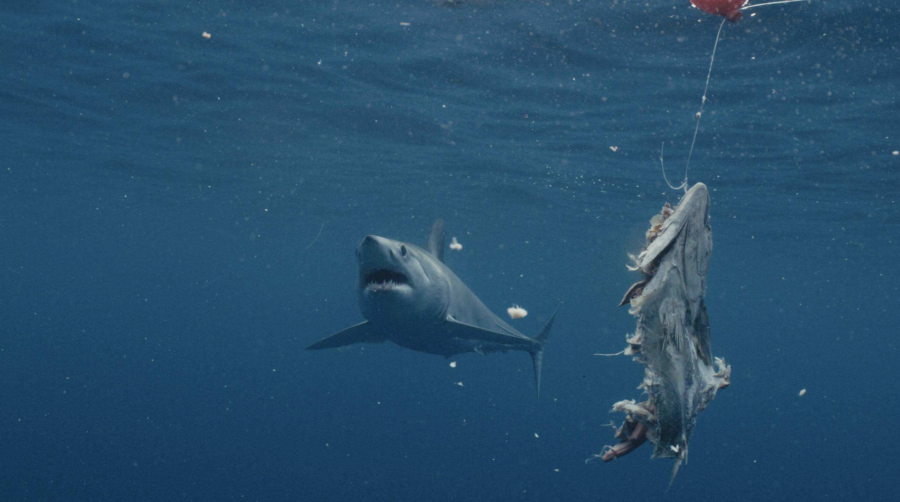
Go behind the scenes of Discovery’s groundbreaking investigation into the ancient predators of the Mesozoic era and the technology used to bring them back to life.
The mysteries of the ancient deep are rising to the surface as Discovery Channel prepares to unveil one of its most ambitious projects to date. When Shark Week 2026 kicks off on Sunday, July 26, at 8pm ET/PT, it brings with it a lineup of 20 all-new premieres designed to push the boundaries of marine science and cinematography. Among these highly anticipated specials is a groundbreaking investigation into the world of Jurassic sharks, a feature that promises to bridge the gap between the modern ocean and the prehistoric past.
For years, the question of whether Jurassic sharks are real or merely the stuff of cinematic legend has captivated audiences. This summer, researchers and visual effects artists are teaming up to provide a definitive answer. While we often think of sharks as unchanging relics of evolution, the fossil record tells a much more complex story of bizarre predators that once ruled the seas alongside the dinosaurs.
What are Jurassic Sharks?
To understand these ancient predators, one must look back over 150 million years. Jurassic sharks were a diverse group of cartilaginous fish that inhabited the Earth’s oceans during the middle of the Mesozoic Era. While they share a common lineage with the great whites and tiger sharks we recognize today, many species from this period possessed anatomical features that seem entirely alien by modern standards.
During the Jurassic period, the ocean was a theater of rapid evolutionary experimentation. Sharks developed unique tooth structures, strange dorsal spines, and specialized body shapes to navigate a world filled with massive marine reptiles. These were the ancestors that survived multiple mass extinctions, refining their biological blueprints into the efficient apex predators currently patrolling our coastlines.
Are these sharks real or recreated?
The upcoming special, titled Jurassic Sharks, addresses the challenge of visualizing creatures that have been extinct for eons. Because sharks are made of cartilage rather than bone, they rarely fossilize well, often leaving behind only their teeth as clues to their existence. This has led many to wonder how much of what we see on screen is based on fact.
The answer lies in a hybrid approach. The sharks featured in the program are very much real in a historical sense—based on rigorous paleontological data—but they are recreated for the screen using revolutionary CGI. By studying the “living fossils” that still swim in our oceans today, scientists can make educated deductions about the muscle structure, movement, and skin texture of their long-lost relatives.
Prehistoric shark species shown
Viewers can expect to encounter a variety of prehistoric shark species that represent the evolutionary milestones of the deep. The program highlights how these ancient giants paved the way for modern titans like the great white. By comparing the skeletal structures found in rare fossil beds with the anatomy of living specimens, the expedition teams aim to show exactly how these predators functioned in their original environment.
The selection of species for the show focuses on those that exhibit the most fascinating adaptations. From the spiked Hybodus to the early relatives of the mackerel shark family, the lineup serves as a visual encyclopedia of the Jurassic sea. These segments are guided by real-world expeditions, where scientists search for modern sharks that share ancestral traits with these prehistoric wonders.
CGI vs real footage breakdown
One of the most innovative aspects of Shark Week 2026 is the seamless merger of cutting-edge visual effects and high-definition underwater cinematography. The production team utilized a technique where real footage of modern shark habitats is used as the canvas for digital recreations.
This CGI vs real footage breakdown is essential for maintaining the show’s immersion. Instead of placing the digital sharks in a sterile, computer-generated world, they are integrated into actual ocean environments. This allows audiences to see how a Jurassic-era predator would interact with modern light filtration, current movements, and schools of fish, providing a perspective that traditional documentaries cannot offer.
Scientific accuracy explained
Discovery Channel has emphasized that while the visuals are high-octane, the foundation remains rooted in scientific accuracy. The revolutionary CGI is not just for entertainment; it is a tool used by researchers to test theories about how these animals hunted and moved.
By recreating the biomechanics of Jurassic sharks, scientists can observe how their unique body shapes affected their speed and agility. Every fin placement and tail flick shown in the digital models is informed by hydrodynamic studies and fossil measurements. This commitment to the data ensures that the prehistoric CGI speculation bait often seen in media is replaced by a genuine, evidence-based reconstruction of life in the ancient oceans.
Final verdict
The return of Shark Week on Sunday, July 26, marks a new chapter in how we perceive the ocean’s history. The “ancient predator returns” framing is not just a marketing hook; it is an invitation to explore the deep roots of a biological success story that has lasted for millions of years.
The final verdict on Jurassic sharks is that they are the essential missing link to understanding the modern ocean. Through the combination of groundbreaking investigations and pioneering technology, Shark Week 2026 proves that the story of the shark is far from over—it is simply being rediscovered. As the 20 new premieres unfold, audiences will see that the line between the prehistoric and the present is thinner than we ever imagined.