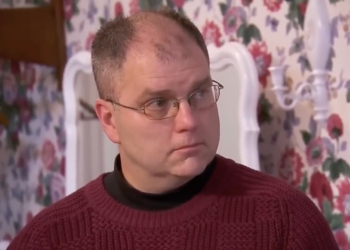
Phillip Lovingfoss became one of Hotel Hell’s most memorable owners after Gordon Ramsay visited the historic Monticello Hotel. Here’s what happened after the show, including his legal troubles, the fate of the hotel, and what is publicly known about his life today.
Phillip (also spelled Philip in some court and public records) Guy Lovingfoss became known to viewers in 2014 as the owner of the historic Monticello Hotel featured in Season 2, Episode 2 of Hotel Hell. Gordon Ramsay’s visit to the Longview, Washington, landmark exposed far more than a struggling hotel. It revealed an owner battling personal demons, mounting financial pressures, and the enormous responsibility of trying to preserve a nearly century-old property.
Although the episode aired on July 28, 2014, it was actually filmed more than a year earlier, in June 2013. By the time millions of viewers watched Ramsay attempt to rescue the hotel, many of the challenges shown on screen had already continued to unfold behind the scenes. In the years that followed, Lovingfoss faced legal troubles, growing financial difficulties, and ultimately lost ownership of the Monticello Hotel.
Here is the verified timeline of what happened to Phillip Lovingfoss after Hotel Hell, based on court records and local journalism.
A Lifelong Connection to the Monticello Hotel
For Phillip Lovingfoss, the Monticello Hotel was far more than a business.
During Hotel Hell, he explained that his connection to the property began in childhood. His mother worked at the hotel, giving him an early familiarity with the historic building that would eventually shape much of his life. Years later, while in his early 30s, he returned to work there as a bartender.
It was during that time that he met Annabelle Lee White Juell (sometimes spelled Annabelle Jewell), the hotel’s owner. The two married despite a significant age difference, and after Juell died in 2004, Lovingfoss inherited the Monticello Hotel at 1405 17th Avenue in Longview, Washington.
The property itself has long been one of Longview’s most recognizable landmarks. Opened in 1923, the Monticello Hotel was among the first major buildings constructed as part of R.A. Long’s planned city. For decades, it served as a centerpiece of downtown Longview, welcoming visitors, business travelers, and community events.
Owning such an iconic building came with enormous responsibility. Historic hotels require constant maintenance, expensive repairs, and steady occupancy to remain financially viable. Although Lovingfoss reportedly invested in restoration work during the earlier years of his ownership, keeping the nearly century-old property operating became increasingly difficult as maintenance costs rose and revenue struggled to keep pace.
By the time Hotel Hell arrived in 2013, the hotel was already facing significant operational and financial challenges.
During filming, Lovingfoss’s girlfriend, Ginger Allred, served as the hotel’s general manager and was heavily involved in the day-to-day operation of the property.
Gordon Ramsay’s Visit Put the Hotel Under a National Spotlight
When Gordon Ramsay arrived at the Monticello Hotel, he found a business struggling on multiple fronts.
One of the biggest issues was that only a limited number of rooms inside the historic main hotel were actually available for guests. Many visitors were instead being accommodated in an adjacent motel section, while several rooms inside the original hotel had reportedly become filled with Phillip Lovingfoss’s personal belongings rather than being used as guest accommodation.
The problems extended well beyond the rooms.
Ramsay criticized the hotel’s overall cleanliness, pointing out numerous maintenance issues throughout the property. In the restaurant, he was equally disappointed by the food, discovering frozen ingredients, including shrimp, along with packaged ravioli and other shortcuts that fell well below the standards expected from a historic hotel restaurant.
The building itself showed clear signs of neglect, despite its rich history and architectural significance. However, the episode quickly became about more than just peeling paint, poor food, and declining occupancy.
Phillip Lovingfoss’s Battle With Alcohol
Perhaps the most memorable aspect of the episode was Phillip Lovingfoss’s struggle with alcohol. Throughout the program, several employees described his heavy drinking as a major obstacle to running the business effectively. Gordon Ramsay confronted him repeatedly, arguing that the hotel’s future depended on Lovingfoss first addressing his addiction.
One particularly emotional moment came when Chef Dan Laney, who had been sober himself for several years, offered to become Lovingfoss’s sponsor and help guide him through recovery. The episode concluded on a hopeful note, stating that Lovingfoss had entered a recovery program following Ramsay’s intervention.
Beyond what was shown on television, some viewers and local observers also commented on what they believed were visible signs of intoxication during portions of filming. Those observations, however, remain personal opinions rather than verified facts.
Unfortunately, there has never been any publicly confirmed information showing whether Lovingfoss maintained long-term sobriety after the episode aired.
An Arrest During the Filming of Hotel Hell
One of the more extraordinary aspects of the Monticello Hotel story is that the drama wasn’t confined to reality television.
While Hotel Hell was being filmed in June 2013, Phillip Lovingfoss was arrested on suspicion of driving under the influence (DUI). The arrest reportedly occurred near the hotel while the production crew was still in Longview.
Although the incident itself did not become a major part of the broadcast episode, it added another chapter to the mounting difficulties surrounding both Lovingfoss and the Monticello during that period.
The arrest also marked the beginning of a series of legal issues that would continue long after Gordon Ramsay and his crew had left Longview. In the years that followed, those court proceedings would become an increasingly significant part of Lovingfoss’s public story, eventually overshadowing his appearance on Hotel Hell.
The Monticello Begins to Unravel
Although Hotel Hellended on an optimistic note, the improvements viewers saw on television were not enough to reverse the hotel’s long-term financial problems.
In January 2014, several months after filming but before the episode aired, Lovingfoss announced that the Monticello Hotel’s restaurant, lounge, and banquet facilities would close. At the time, he said he wanted to pursue other endeavors.
While the hotel itself and its adjoining motel rooms continued operating for a period, the closure of the food and beverage operations was a significant blow. Restaurants and banquet facilities often provide an important source of income for historic hotels, particularly those that host weddings, conferences, and community events.
The closure suggested that the financial pressures facing the Monticello were becoming increasingly difficult to overcome.
Over the next few years, the hotel remained the subject of numerous legal and financial proceedings involving unpaid debts, liens, creditor actions, and efforts to stabilize or sell the property. As the financial strain mounted, it became increasingly clear that continuing to operate the historic hotel would be an uphill battle.
By 2016, the Monticello Hotel had been listed for sale or lease, and ownership would eventually pass to new owners, bringing Phillip Lovingfoss’s tenure at the property to an end.
More Legal Trouble Followed
While the hotel’s finances continued to deteriorate, Lovingfoss also faced a growing number of legal challenges. Court records show that he was involved in several DUI-related matters after the events featured on Hotel Hell.
In March 2015, Lovingfoss was arrested on suspicion of driving under the influence and hit-and-run. The hit-and-run allegation was later dismissed during the legal process, but the DUI-related proceedings continued.
Those cases ultimately led to a much more serious criminal charge.
The Judge Intimidation Case
The most significant legal case involving Phillip Lovingfoss stemmed from threats allegedly made during the course of his DUI proceedings.
According to court testimony, Lovingfoss, while reportedly intoxicated, made threatening statements directed at a judge who had presided over earlier hearings connected to his DUI case. The threats were made during calls to police dispatch and included statements that were later presented as evidence in court. Some reporting identified Judge Ed Putka as the judge involved in the earlier DUI proceedings that formed the background to the case.
The matter proceeded to trial, where prosecutors argued that Lovingfoss had knowingly intimidated a judicial officer through explicit threats. His defense challenged aspects of the prosecution’s case and sought to move the trial to another location due to local publicity, but that request was denied.
The trial included testimony from several witnesses, including Lovingfoss’s girlfriend, Ginger Allred.
Conviction and Sentencing
In 2016, a jury found Phillip Lovingfoss guilty of felony intimidation of a judge.
On July 12, 2016, Cowlitz County Superior Court Judge Stephen Warning sentenced the then 51-year-old to 90 days in jail. Prosecutors had asked for a substantially longer prison sentence—reportedly approximately 13 months—while the defense urged consideration of Lovingfoss’s ongoing efforts to address his alcohol addiction and plans for continued mental health counseling and substance abuse treatment. Judge Warning imposed the shorter 90-day sentence.
The conviction became the most significant legal development in Lovingfoss’s public life after his appearance on Hotel Hell.
Losing the Monticello Hotel
At the same time as the legal cases were unfolding, the future of the Monticello Hotel itself was becoming increasingly uncertain. Between 2013 and 2016, the property remained under considerable financial pressure. Public records documented ongoing debt issues, creditor claims, liens, and repeated efforts to refinance, restructure, lease, or sell the hotel.
Operating a historic property of that size had become financially unsustainable. The combination of declining operations, legal expenses, maintenance costs, and other obligations placed enormous pressure on the business.
Eventually, the hotel changed hands in late 2016 or early 2017, ending Phillip Lovingfoss’s ownership after more than a decade. Under subsequent ownership, the building underwent extensive renovations, preserving historic features while adapting much of the property into residential apartments.
What Happened to Phillip Lovingfoss After Hotel Hell?
After his 2016 conviction and 90-day jail sentence, Phillip Lovingfoss largely disappeared from the public spotlight. Very little verifiable information has emerged about his life in the years since losing the Monticello Hotel.
There are no credible public records indicating additional major criminal convictions after 2016. Likewise, there is no verified evidence that he has died — no obituary or official death notice exists despite occasional online claims.
Claims that Lovingfoss became homeless, died shortly after Hotel Hell, or experienced other dramatic outcomes remain unverified rumors circulating on forums and social media. They are not supported by credible reporting and should be treated as such.
The same applies to his recovery. While Hotel Hell stated that Lovingfoss had entered a recovery program, no publicly available information confirms long-term sobriety.
What Happened to the Monticello Hotel?
Although Phillip Lovingfoss is no longer connected to the property, the Monticello’s story continued. New owners invested heavily in restoration, and by 2019 the building had largely transitioned from hotel operations to residential apartments and adaptive reuse, preserving the landmark for the community in a new form.
If you’re curious about the hotel’s remarkable journey—from its grand opening in 1923 and its appearance on Hotel Hell to its multimillion-dollar restoration—be sure to read our complete history of the Monticello Hotel in Longview.
Why Phillip Lovingfoss’s Story Still Stands Out
More than a decade after Hotel Hellwas filmed, Phillip Lovingfoss’s story remains one of the more memorable episodes in the series — not simply because of the condition of the hotel, but because of the deeply personal struggles that unfolded alongside the business.
Unlike many owners featured on the show, Lovingfoss had a lifelong emotional connection to the property. His mother had worked at the Monticello when he was a child, he later worked there himself as a bartender, and he eventually became its owner after marrying Annabelle Juell and inheriting the hotel following her death. That personal history made the hotel’s decline particularly difficult to watch.
Running a historic property is an enormous financial undertaking. At the same time, Lovingfoss was portrayed as battling alcohol addiction — a struggle that became a central theme of the episode and later intersected with his legal troubles. Even after Ramsay’s intervention, underlying financial challenges remained, and the hotel was sold a few years later.
The unusual overlap between reality television and real life — including the DUI arrest during filming — only added to the episode’s lasting impact. For many viewers, it highlighted how addiction, financial hardship, and the demands of a struggling historic business can become deeply intertwined.
What Happened to Phillip Lovingfoss? The Bottom Line
Phillip Lovingfoss’s journey with the Monticello Hotel began long before Hotel Hell. His childhood connection, marriage to Annabelle Lee White Juell, and inheritance tied much of his adult life to one of Longview’s best-known landmarks.
During his ownership, the property faced mounting challenges compounded by his public struggle with alcohol and later legal issues. His 2016 felony conviction for intimidating a judge and 90-day jail sentence remain the most significant documented developments after the show. Ownership changed hands around the same time, closing that chapter.
Since then, Lovingfoss has stayed largely out of the public eye. While rumors persist online, none are backed by credible records. The Monticello Hotel continues as a Longview landmark under new ownership — its historic building enduring beyond any single chapter, including Lovingfoss’s turbulent tenure.