Explore the mystery of the record-breaking 20-foot giants rumored to patrol the deep waters of Southern California in this Shark Week 2026 investigation.
For decades, the dark, nutrient-rich waters off the coast of Southern California have been the source of legendary tall tales. Local fishermen have long whispered about “ghosts of the deep”—massive, torpedo-shaped predators patrolling the canyons of the Pacific. While the shortfin mako is famously known as the fastest shark in the ocean, capable of reaching speeds up to 45 miles per hour, these rumors suggested something more: a size that defied scientific records.
With the arrival of Shark Week 2026, the mystery of the biggest mako on earth explained takes center stage. A new investigation is forcing the marine biology community to take these stories seriously, moving beyond the “one that got away” anecdotes and into the realm of hard evidence.
What the episode is about
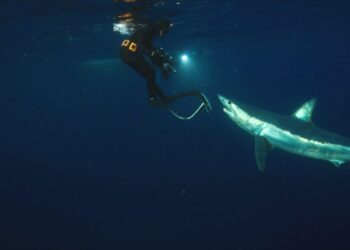
The highly anticipated Discovery special, “Biggest Mako on Earth,” follows a high-stakes expedition led by veteran marine biologist Dr. Tristan Guttridge, conservationist Kendyl Berna, and expert shark tagger Keith Poe. The team is on a mission to validate a series of startling new developments that have recently surfaced in the shark research community.
Specifically, the episode investigates new footage and a recently published photograph that appears to capture a mako shark pushing the 15-foot mark. For a species where a 12-foot individual is considered a true giant, these images have sent shockwaves through the industry. The team ventures into the coastal waters surrounding Santa Catalina Island, a known hotspot for pelagic predators, to determine if these “megamako” rumors are fact or fiction.
How big can mako sharks get?
To understand why a 15-to-20-foot mako is so significant, one must look at the standard mako shark size record. On average, adult shortfin makos typically measure between 6 and 9 feet in length. Female makos, which grow larger than males, occasionally reach 10 to 12 feet, weighing in at over 1,000 pounds.
The current world record for a mako caught on a line stands at approximately 12 feet and 1,223 pounds. However, the legends the team is chasing involve sharks that would dwarf these figures. If a giant mako shark real existence is confirmed at 15 or 20 feet, it would mean these animals are reaching sizes comparable to large great whites, fundamentally changing our understanding of their growth potential and their role in the oceanic food web.
Is the “biggest mako” verified?
The central hook of the Discovery shark mako episode is the record-breaking shark size claim. Currently, the scientific community remains cautious. While the photo evidence is compelling, verifying the size of a free-swimming shark in the open ocean is notoriously difficult without a physical specimen or laser photogrammetry.
This has sparked a significant controversy over “largest ever filmed” titles. Critics often point out that forced perspective in underwater photography—where an object closer to the lens appears much larger than it is—can lead to exaggerated size estimates. The team’s goal is to move past the visual “estimate” and use tagging and measuring technology to provide a definitive answer.
Where filming took place
The expedition focused its efforts on the Southern California Bight, specifically the deep-water trenches near Santa Catalina. This region is a biological crossroads where cold, nutrient-dense upwellings meet warmer currents, creating a perfect hunting ground for mako sharks.
Southern California is unique because it serves as a nursery for many shark species, but the deep offshore canyons are where the “granders”—sharks weighing over 1,000 pounds—are known to lurk. Filming in these blue-water environments requires extreme precision, as makos are highly migratory and can vanish into the depths in a heartbeat.
What scientists discovered
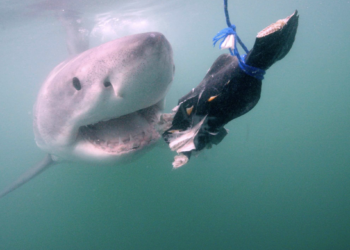
During the investigation, what scientists discovered was a complex picture of mako behavior. Beyond just looking for size, the team utilized innovative tagging technology to track how these massive individuals move through the water column.
The findings suggest that these larger makos may be occupying a specific ecological niche, hunting larger prey than their smaller counterparts and potentially staying in deeper, cooler water for longer periods. The data gathered during the “Biggest Mako on Earth” investigation provides a rare glimpse into the life of a mature apex predator that has managed to survive and grow for decades in a heavily fished ocean.
Conclusion
As Shark Week 2026 continues to push the boundaries of oceanic exploration, the quest for the world’s largest mako reminds us how much of the sea remains a mystery. Whether the 20-foot mako is a biological reality or an enduring maritime myth, the search itself has revealed the incredible resilience and power of these predators.
The investigation off Santa Catalina proves that even in well-traveled waters, there are still giants waiting to be found. As the fastest and perhaps most elusive of the great sharks, the mako remains an enduring symbol of the ocean’s untamed nature.