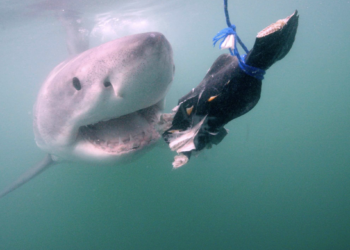
Discovery’s Shark Week 2026 dives into the abyss to reveal the glowing, prehistoric, and bioluminescent species lurking off the American coast.
The deep blue waters surrounding North America are hiding secrets that look like they belong in a science fiction blockbuster. As part of the upcoming Discovery Shark Week 2026, the documentary Alien Sharks: Untamed America is set to pull back the curtain on the most bizarre, glowing, and structurally unique predators patrolling our own backyards.
From the neon-green luminescence of swell sharks to the prehistoric silhouette of the sawfish, these are not the typical great whites you see in the headlines. They are the strange shark species discovery of a lifetime, proving that the most unusual deep sea sharks are right here at home.
What are Alien Sharks?
When we use the term alien sharks, we are not talking about creatures from another planet. Instead, scientists and researchers use this label to describe shark species that possess biological traits so rare and specialized that they defy our traditional understanding of what a shark looks like.
These unknown deep sea creatures often live in the “midnight zone” or bathypelagic regions of the ocean, where sunlight never reaches. To survive in these extreme environments, they have evolved features that seem otherworldly, ranging from protruding jaws and needle-like teeth to the ability to produce their own light.
The Scientific Explanation: Why Sharks Look Alien
The reason these sharks look so unusual is a matter of pure survival and evolutionary adaptation. In the deep sea, every physical trait serves a specific purpose. For instance, bioluminescence—the ability of a shark to glow—isn’t for show; it is used for communication, attracting prey, or camouflaging against the faint light from the surface, a process known as counter-illumination.
Many alien sharks also feature highly specialized sensory organs. Because visibility is near zero in their natural habitat, some species have developed elongated snouts or massive, light-sensitive eyes to detect the tiny electrical pulses of nearby prey. Their “untamed” appearance is simply nature’s way of building the perfect predator for an environment characterized by crushing pressure and absolute darkness.
Deep Sea Species Featured in Untamed America
The Alien Sharks: Untamed America documentary, featuring wildlife biologist Forrest Galante, takes viewers on a quest across the United States to find these bizarre residents. One of the primary stars is the swell shark, a creature capable of expanding its body to twice its normal size to prevent predators from pulling it out of rocky crevices. Even more fascinating is their biofluorescence; they absorb blue light and re-emit it as a vibrant green glow, a hidden language visible only to other sharks.
The expedition also highlights the elusive sawfish, a prehistoric-looking predator that uses its tooth-studded rostrum to detect and impale fish. While they might look like relics from the Jurassic era, these “alien” residents are vital components of our modern marine ecosystems. The documentary explores how these species have remained largely hidden from human eyes despite living just off the American coastline.
Exploring the Alien Shark Documentary Highlights
As part of the broader Shark Week 2026 lineup, which kicks off Sunday, July 26, Alien Sharks: Untamed America serves as a cornerstone for those interested in the mysterious and the macabre. While other specials like Invasion of the Mega Sharks focus on sheer size, this program focuses on the strange. It moves away from the “monster” narrative and into the realm of biological wonder.
The documentary provides a rare look at the pioneering technology used to film in the deep. From remote-operated vehicles (ROVs) to low-light cameras, the gear used by Galante and his team allows us to see these creatures in their natural state for the first time. It is a heart-pounding investigation into the corners of the Atlantic and Pacific that remain largely unexplored.
The Final Breakdown: Why This Discovery Matters
The exploration of unusual sharks is about more than just curiosity; it is about conservation and understanding the health of our oceans. Many of these strange shark species are currently under threat from deep-sea trawling and climate change before we even have a chance to fully study them. By explaining the “alien” nature of these animals, researchers hope to foster a deeper respect for the diversity of marine life.
As we look toward the 250th anniversary of the United States, discovering that our waters are home to such untamed and exotic life forms is a reminder of the vast wilderness that still exists beneath the waves. Shark Week 2026 proves that you don’t need to travel to a distant galaxy to find an alien—you just need to look a little deeper into the American blue.