A deep dive into the harrowing EF-4 twister that leveled Mayfield, Kentucky, featuring survivor accounts and analysis from the Discovery series In the Eye of the Storm.
The devastating events that unfolded in Graves County remain etched in the American consciousness as one of the most harrowing weather disasters in modern history. Often referred to in meteorological circles and documentaries as the Mayfield Beast, this long-track twister redefined what we know about storm intensity and survival. For those seeking the Mayfield Tornado true story, the reality is a mix of atmospheric anomaly, tragic loss, and incredible heroism that feels almost like a Hollywood script, yet every second was captured by those living through the nightmare.
As explored in the harrowing In the Eye of the Storm Discovery episode 3 titled “The Mayfield Beast,” which aired in Season 3, the event provided a rare and terrifying look at what happens when a community is caught directly in the sights of an EF-4 monster. From the leveling of the local county jail to the frantic search for survivors in a flattened downtown, the Mayfield tornado Discovery coverage has helped a global audience understand the sheer scale of the Kentucky tornado that changed everything.
Timeline
The chronological progression of that night began with a sense of unease that quickly escalated into an existential threat. On that fateful Friday, the atmosphere across the mid-south was primed for violence. By early evening, a supercell began to cycle, dropping a wedge that would stay on the ground for an unprecedented distance. The timeline is critical to understanding how the tragedy unfolded.
As the sun set, the National Weather Service began issuing increasingly dire warnings. Residents had roughly 20 to 30 minutes of lead time—a window that is significant in meteorology but felt like mere seconds for those trying to secure their families. By 9:25 PM, the sirens in Mayfield were a constant, haunting backdrop to the approaching roar of what survivors described as a freight train or a jet engine. The impact on the town occurred shortly after, leaving a 200-mile scar across the landscape.
Tornado Path
When examining the tornado path, the data reveals a terrifying level of consistency. The Mayfield Beast was not a typical twister that hops and skips; it was a persistent, grinding force of nature. Starting in northeastern Arkansas, it tore through Missouri and Tennessee before entering the Bluegrass State. The Kentucky tornado track was so long and wide that it sparked debates among meteorologists about whether it surpassed the historic “Tri-State Tornado” of 1925.
As it entered Graves County, the storm maintained its EF-4 status, with winds estimated at peaking near 190 mph. The path took it directly through the heart of Mayfield, a town of roughly 10,000 people. It didn’t just clip the outskirts; it bisected the community, hitting the historic downtown square and industrial areas with peak intensity. This direct hit is what led to the catastrophic damage seen at the candle factory and the Mayfield consumer products plant, which became focal points for the national news cycle.
Survivor Accounts
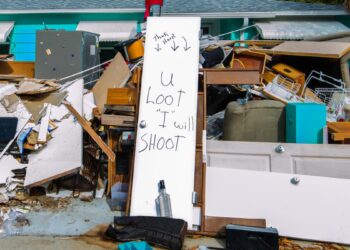
The true story of Mayfield is best told through the voices of those who emerged from the rubble. Survivor accounts from the night describe scenes that defy belief. In the Discovery episode “The Mayfield Beast,” viewers witness the specific horror at the Mayfield county jail. As the EF-4 tornado devastated the structure, officers found themselves in a dual crisis: they had to rescue inmates trapped under collapsed masonry while simultaneously ensuring that the perimeter remained secure. It was a race against time where every second meant the difference between life and death.
Other accounts come from the downtown area, where families huddled in basements as their entire homes were lifted off their foundations. One survivor recounted the sensation of the “eye” passing over, a brief, eerie silence followed by the second wall of the storm that finished what the first had started. These stories are not just about the wind; they are about the silence afterward, the smell of broken cedar and natural gas, and the first screams of neighbors calling out to one another in the pitch black.
Documentary Analysis
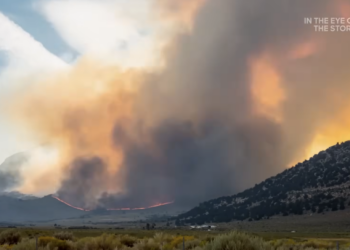
The Mayfield tornado Discovery episode, part of the “In the Eye of the Storm” series, offers a unique documentary analysis by utilizing thousands of hours of eyewitness footage. Unlike traditional news reports, this analysis focuses on the “ground-truth” perspective—what people saw on their cell phones and security cameras as the storm hit.
The documentary highlights how the Mayfield Beast was able to maintain its strength for so long. Experts interviewed in the series point to a “perfect storm” of high dew points and a powerful low-level jet stream that fed the twister a constant supply of energy. By synchronizing the footage from different angles, the Discovery analysis shows the exact moment the tornado underwent a transition known as a “mesovortex,” where multiple smaller funnels spin within the larger funnel, creating erratic and extreme “pockets” of 200 mph winds that can level one house while leaving the neighbor’s mailbox standing.
Recovery
Today, the story of Mayfield has shifted from one of destruction to one of recovery. The physical scars on the landscape are still visible, but the resilience of the community has become the new focus. Rebuilding a historic downtown is a decades-long process, but the spirit of the residents remains unbroken.
Recovery efforts have seen millions of dollars in federal and private aid flow into Graves County, but the psychological recovery is a slower journey. The town has implemented new, state-of-the-art warning systems and built more storm shelters in public spaces, learning the hard-earned lessons of that night. Mayfield is no longer just a dot on a map or a tragic headline; it is a symbol of how American small towns can face the absolute worst of nature and still find a way to stand back up. Finding the true story of that night requires looking past the debris and into the strength of the people who call Kentucky home.
Also read: